Accessing music online has never been easier, with services like Mp3Juice offering users browser-based song search, preview, and download. However, the legal framework surrounding what you can download or share through platforms like Mp3Juice remains complex. Legality is not one-size-fits-all: it depends on copyright ownership, the type of content (composition vs recording), platform terms, your country’s laws, and how material is used or distributed afterward. This article untangles these details to help you understand what you may, and may not, legally download or share.
Copyright Ownership: Compositions vs Recordings
Music copyright involves at least two separate rights: the underlying composition (music and lyrics) and the specific sound recording or performance. For instance, the composition of ‘Nkosi Sikelel’ iAfrika’ is separate from a contemporary recording of it. Each layer, composition and recording, can have different rights holders and legal protections, lasting for decades after their creation. Downloading a song from Mp3Juice, even if it’s a traditional melody, might infringe the rights of the performer or label that owns the specific recording, even if the tune itself is public domain.
Public Domain and Licensed Content
Not all tracks found through Mp3Juice are under the same legal protection. Content is typically divided into:
- Public domain compositions: Older songs whose copyright has expired may be free to use, but new recordings of them usually are not.
- Creative Commons or open-licensed music: Some artists release their recordings for free use, but licenses specify what is allowed (for example, non-commercial or attribution-required).
- Copyrighted, commercially licensed content: Most contemporary and popular music falls in this category and usually cannot be downloaded or shared without permission from the rights holders.
If you use Mp3Juice to find a public domain hymn, you might lawfully download an antique or government recording, but a studio cover or modern performance likely remains protected.
Country Law and Different Download Rules
Your legal ability to download or share music from platforms like Mp3Juice is strongly influenced by your country’s law. Some nations have stricter enforcement, broader exceptions for personal copying (private use), or different durations for copyright protection. South Africa, the UK, and Nigeria, for instance, each apply copyright terms and enforcement differently, potentially affecting both the downloader and the platform operator. Do not assume rules based on US or EU law automatically apply in your region.
| Scenario | Likely Legal? | Why? |
|---|---|---|
| Downloading a traditional folk song recording (pre-1930) | Sometimes | Check if both the composition and recording are public domain in your country. |
| Downloading a 2025 chart hit without permission | No | Recently released works are nearly always under copyright protection. |
| Downloading an artist’s track under Creative Commons | Yes, if license terms are followed | Open licenses may allow download and sharing, not always commercial use. |
| Sharing a downloaded MP3 to social media | Rarely legal | Distribution rights are rarely granted by download or personal-use exceptions. |
Platform Terms and Source Permissions
Downloading from Mp3Juice often means using audio or video sourced from platforms such as YouTube or other streaming sites. These platforms have their own terms of service: usually, content is licensed solely for streaming, not permanent offline storage or redistribution, unless a download button is clearly provided. Circumventing technical measures to download music may violate not only copyright, but also these platform terms, even where statutory exceptions (such as educational or fair use) exist. Permissions granted by YouTube or another site apply only within their rules, not carte blanche for third-party downloads.
What You Can (and Can’t) Legally Download with Mp3Juice
Legal downloads via Mp3Juice are generally limited to material that meets at least one criterion:
- The audio is in the public domain both as composition and recording in your jurisdiction.
- The owner has granted clear written permission, typically via an open license or specific offer.
- The platform source authorizes downloads for your personal, non-commercial use and does not prohibit third-party tools.
However, vast amounts of commercial music, including contemporary South African, Afrobeats, and international pop, are generally not legally available for free download or sharing without explicit licensing. Even if a file is found via Mp3Juice, its presence does not guarantee legal use rights.
Downloading for Personal Use and Sharing: Key Differences
Some countries provide limited exceptions for personal use or format-shifting (such as moving music between your devices), but these do not legitimize sharing files with friends, family, or the public on social media. Uploading or reposting MP3 files, even if downloaded legally for private use, can quickly cross into unauthorized ‘distribution,’ which is almost always a protected right held by the copyright owner, or their licensee, regardless of your intent.
Practical Checklist for Mp3Juice Users
- Know the difference between composition and recording rights before downloading.
- Look for clear labels or permission indicating content is public domain or open licensed.
- Read your country’s position on private copying and music downloads, laws differ widely.
- Remember platform provider terms, especially for content sourced from YouTube or similar.
- Avoid sharing or uploading MP3s unless rights or licenses specifically allow it.
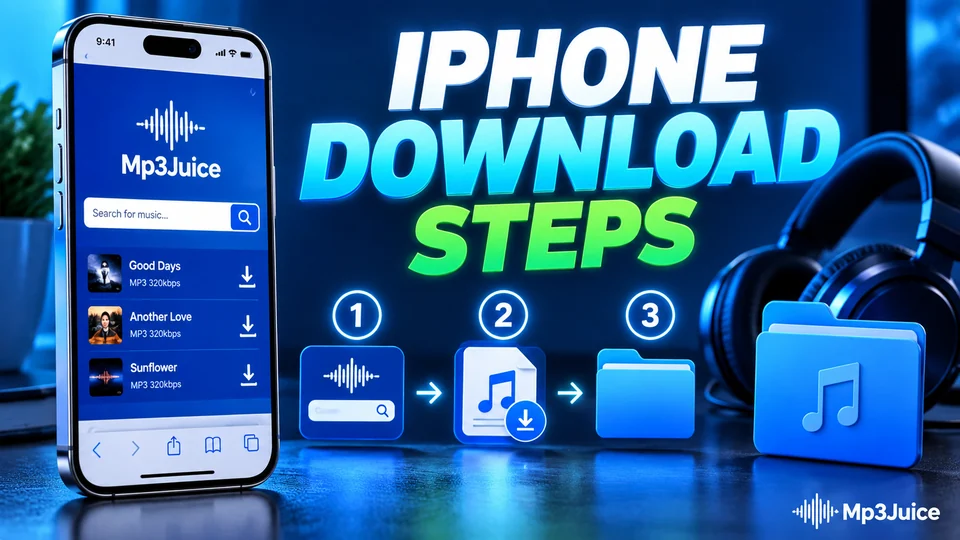
- For help with search and device use, see How to Use Mp3Juice Online in Your Browser and Mp3Juice on iPhone and iOS Step by Step.
Related Examples and Resources
If you’re interested in using Mp3Juice for legitimate searches, such as looking up freely usable gospel recordings or open-licensed Amapiano tracks, start with:
- Find Gospel and Worship Music With Mp3Juice
- Find Amapiano Music With Mp3Juice
- Find Songs Faster With Mp3Juice Music Search
These guides highlight search methods, genre distinctions, and lawful use practices for regional and traditional music.
FAQs: Mp3Juice Legality and Downloads
Is all music found on Mp3Juice legal to download?
No. Many results are commercially protected. Only public domain, clearly open-licensed, or explicitly authorized content is generally legal to download.
Does downloading a song for personal listening make it legal?
No blanket exception exists. Some countries allow limited personal copying, but downloading without rights-holder permission remains restricted in many regions, regardless of intent.
Can I share tracks downloaded via Mp3Juice with friends or on social media?
No. Sharing often equals distribution, a right reserved for creators or licensees, not end users. Exceptions for private use rarely cover uploading or redistributing files.