Many music fans want fast, hassle-free access to their favourite songs without cluttering their devices with extra apps or software. Mp3Juice is designed around this idea: everything works inside your browser, with no installation required. But what are the real differences between browser-based use and traditional software? How do you identify what’s an actual music file versus an installer or sneaky extension? This article gives an in-depth look at using Mp3Juice, with clarity on files, permissions, download locations, updates, and how to avoid common pitfalls of non-native music tools.
Browser-Based Access Versus Installed Software
Mp3Juice operates as a web application: it runs inside Chrome, Safari, Firefox, Edge and similar browsers, not as a standalone app. Installed software (programs you download and install) require permissions, create folders, and can run in the background, while browser tools use existing web functions. Here’s how the two approaches compare:
| Feature | Browser-Based (Mp3Juice) | Installed Software |
|---|---|---|
| Setup | No installation, just visit site | Download and install program |
| Permissions | Follows browser/device defaults | Requests access at install |
| Updates | Automatic site upgrades | User/manual updates needed |
| File Handling | Downloads to visible folders | May use hidden app folders |
| Security | Browser protections apply | Relies on software source |
This means you don’t need to install anything extra to use Mp3Juice. The browser manages downloads, permissions, notifications, and security screenings. If you’re asked to install an app or extension, you’re likely not on the genuine site or are seeing deceptive ads.
Ordinary Media Files Versus Apps, Extensions, and Installers
When you use Mp3Juice, your downloads should be standard media files, mostly .mp3 for audio, or .mp4 for video. These are played by built-in or common player apps (like VLC, Windows Media Player, Apple Music, or your phone’s audio tool). They never ask for extra permissions, never install themselves, and don’t require an installation process.
Be wary of downloads with these characteristics:
- File extensions such as .exe, .apk, .msi, .dmg, .scr
- Prompts to add “free download helpers” or browser extensions
- Files that trigger antivirus warnings or security blocks
- Popups requesting unusual permissions (like reading your browser data)
Mistaking these for real songs can put your device at risk. Always check the file type before opening. For a deeper look at legitimate music download formats and common audio settings, see MP3 Audio Explained.
How Permissions Work in Browser-Only Use
Your browser enforces a permission system for downloads, notifications, and local storage. When you save a song from Mp3Juice, you:
- Usually choose a folder or use your device’s Downloads area
- Might need to grant your browser access to save files (usually a one-time prompt)
- Never need to give full device permissions (as required by typical apps)
It’s safe to allow your browser to handle downloads, but never accept prompts to give access to contacts, device usage, phone features, or install browser add-ons for music search. To adjust download settings, check your browser’s preferences or consult Mp3Juice on Android Without Installing an App for Android-specific guidance.
Updates, Features, and Browser Shortcuts
Browser-based sites like Mp3Juice update features on the server side, which means improvements (like search enhancements or new embed previews) appear instantly across all devices. You’ll rarely need to do anything, just refresh the site in your browser. Contrast this with traditional software, which may nag for updates, require restarts, or go out-of-date quickly.
While some browsers offer a “Add to Home Screen” or “Install Site” option, this simply creates a browser shortcut. It doesn’t install an app, it just launches the site in a dedicated window. The site is still running in your browser with all its typical protections and limitations.
-
Key browser shortcut points:
- No extra permissions are needed
- No storage beyond normal browser cache or download area is used
- Uninstalling the shortcut only removes the link, not your files or browser
Finding and Using Your Downloaded Music
Where your browser puts downloads depends on your device and browser settings. On phones, the default is usually the Downloads folder inside your Files or My Files app. On PCs, it’s typically in the Downloads folder on your desktop or in File Explorer. Follow the prompts your browser gives, most show the file as soon as it’s finished.
Downloaded MP3 or MP4 files can be moved, played, or transferred just like any other media. They don’t automatically go into your Apple Music or Google Play Music library, manually open or import them with your audio player of choice.
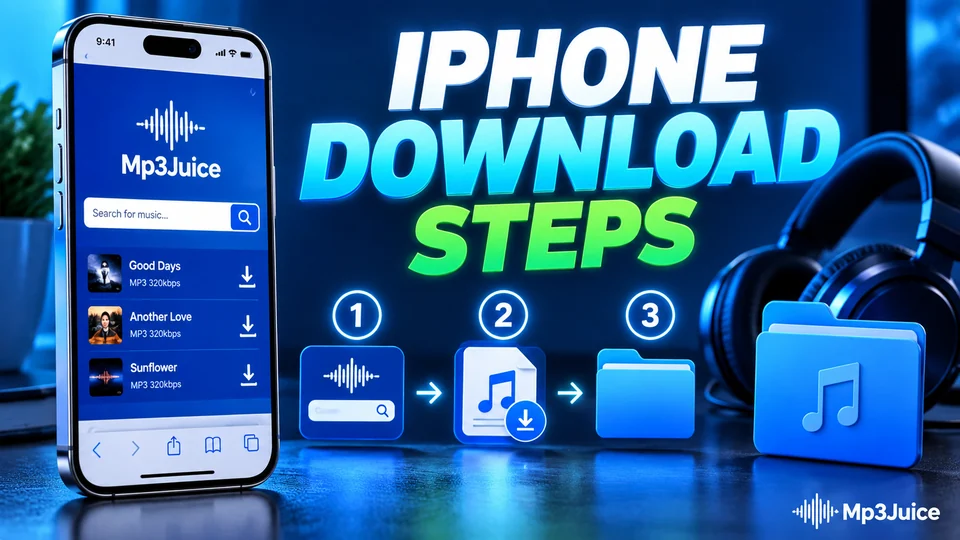
For device-specific directions, see How to Use Mp3Juice Online in Your Browser (cross-platform) or Mp3Juice on iPhone and iOS Step by Step.
Practical Example: A Browser-Only Mp3Juice Session
- Open your preferred browser and go to the official Mp3Juice site.
- Type a song, artist, or full YouTube URL into the search box.
- Review results and select a download option, choose MP3 for audio.
- Click to download; your browser will prompt if needed, then save it locally as a .mp3 file.
- Locate the download in your Files app (on mobile/tablet) or Downloads folder (on desktop).
- Tap or click to play in your usual music player. No installation, no added permissions, completely browser-based.
Browser Music Use Checklist
- Always check file extensions before opening downloaded files
- Refuse prompts to install software or browser extensions unrelated to secure download management
- Use your browser’s built-in controls to find, move, or manage music files
- Regularly clear out your Downloads folder to save space
- Know that browser shortcuts are not native apps, they just link to the site
FAQs: Using Mp3Juice Without an App
What if I see a download asking for installation?
Legitimate browser downloads from Mp3Juice will never require installation. If you see installers (.exe, .apk, browser extensions), close the prompt, it’s unrelated or unsafe for ordinary music downloads.
How do I update Mp3Juice or add new features?
You don’t install updates for browser sites like Mp3Juice. Just refresh the page for the latest updates. Optional feature changes are made by the site, not by users manually.
Will copying a browser shortcut to my home screen install an app?
No, adding a site to your home screen simply creates a link to open Mp3Juice in your browser. It does not install a full app or software, nor does it change permissions on your device.