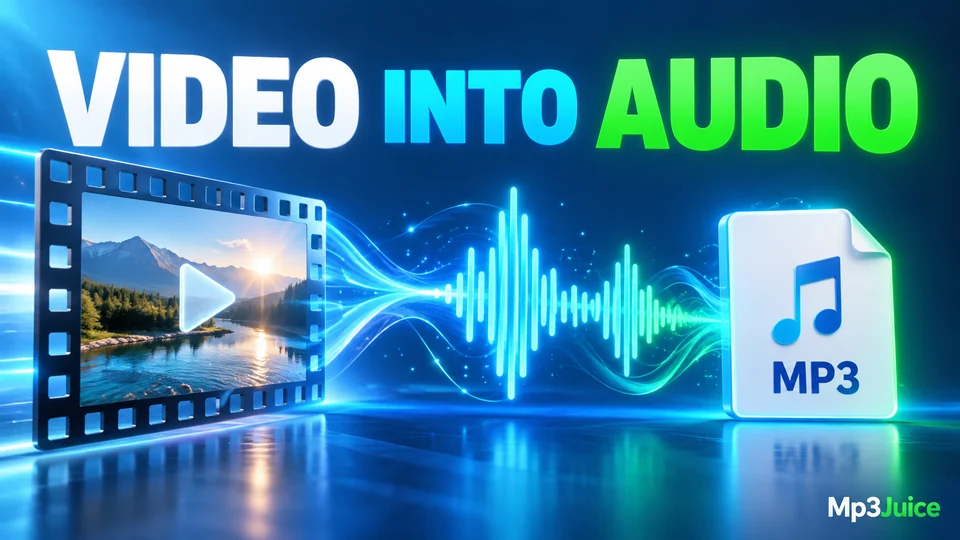
Transforming your favorite online videos into MP3 audio files for offline listening is a practical skill, especially when you’re using a web tool like Mp3Juice. This guide explains how you can convert a video by URL, such as a YouTube link, into an MP3, clarifies the process stages (from link retrieval, to cloud-based transcoding, to browser transfer), and finishes with methods to check your output file before adding it to a local playlist.
How Conversion Works on Mp3Juice
Mp3Juice uses an online system that distinguishes three key steps: retrieving publicly available video content from a URL, transcoding the remote video file into MP3 format on the server, and finally transferring the result to your device through your browser. This means you never upload your own files; instead, the process begins with a valid video link, most commonly from popular platforms like YouTube.
Step 1: Paste a Video URL
Your starting point is copying the video’s URL. Most users prefer YouTube URLs, but any video source compatible with Mp3Juice’s backend may be supported. To do this:
- Navigate to the video site (e.g., YouTube).
- Copy the address bar link for the specific video you want.
- Return to the Mp3Juice homepage and paste the URL into the input box.
Some browsers support clipboard integration, making the paste process even easier. Brand charts and music recommendations can also help you discover trending or regional content for conversion.
Server-Side Retrieval and Transcoding
Once a URL is submitted, Mp3Juice’s server-side system fetches the source video and analyzes the available media tracks. The transcoding process happens remotely (in the cloud, not on your device). This stage:
- Extracts the audio from the video’s stream (MP4, WebM or other supported formats).
- Converts (transcodes) the audio data into the MP3 format using standard codecs.
- Prepares both preview and download links for you, the user, to access.
This all happens before any data is delivered to your browser, so your device never downloads the original video, just the resulting audio file, saving both time and bandwidth.
Audio Format Options and Output
Mp3Juice typically provides output as an MP3 file but often offers an MP4 option for users who want video as well. For audio, MP3 is distributed as a compressed, lossy format, offering a familiar balance between file size and quality. Not all solutions allow custom bitrate selection, so default encoding is applied during transcoding.
| Format | Description | Common Use Case |
|---|---|---|
| MP3 | Compressed audio only | Music, podcasts, audio clips |
| MP4 | Audio + Video | Video playback, lyrics with visuals |
For more details on how MP3 works and its limitations, check out this technical MP3 audio overview.
Downloading and Saving the MP3
After transcoding, Mp3Juice presents download links in your browser. Clicking the MP3 link starts the file transfer via standard browser controls. Here’s how this works:
- Browser prompts: Most browsers like Chrome, Firefox, and Safari will ask if you want to save or open the file. On mobile, your device’s file manager (Files on iOS, Files or Downloads on Android) manages the location.
- Download location: The file goes to your browser’s default downloads folder unless you set a different save path. You can check or change your downloads location in browser settings.
- File management: The downloaded MP3 isn’t automatically imported into a music app, you must add it manually if desired.
Refer to this guide on finding and managing downloaded music files for more device-specific tips.
Validating Your MP3 Output
After download, it’s good practice to check that your MP3 file:
- Plays correctly in your chosen audio player (VLC, Windows Media Player, iTunes, etc.).
- Shows reasonable file size (usually a few MB for a typical song).
- Has expected tags, duration, and audio quality.
If the file does not play, is unexpectedly short, or has artifacts (like noise or skips), try converting the video again. Sometimes source video issues (e.g., copyright blocks, region restrictions, or playback errors) disrupt the process.
Comparison: Mp3Juice vs Other Online Converters
| Feature | Mp3Juice | Other Sites |
|---|---|---|
| URL Input | Yes | Usually Yes |
| Local File Upload | No | Sometimes |
| Audio Only Output | Yes (MP3) | Yes |
| Video Output | Yes (MP4 opt.) | Variable |
| Account Required | No | Often No |
| Batch Download | No | Rarely |
| Preview Option | Yes | Rarely |
For a closer look at converter features and differences, see Mp3Juice MP3 Converter Features and Best Uses.
Troubleshooting Common Conversion Issues
- If the service cannot access the video (removed, restricted, age-protected), try another video or check your URL for errors.
- Browser warning messages should be reviewed, do not disable protective features to force downloads. Consult common Mp3Juice troubleshooting steps in case of repeated disruptions.
- If no MP3 is provided, check if the original video actually contains audio or if a music-rights block applies.
Quick Checklist for Converting Video to MP3
- Copy a precise and valid video URL from a supported source.
- Paste the link into the Mp3Juice search/conversion bar.
- Wait for server-side transcoding and result listing.
- Choose MP3 (or MP4) output and download to your device.
- Locate the file in your Downloads folder and try playing it before reusing or sharing.
Frequently Asked Questions
Is it legal to convert any online video to MP3?
Certain videos are copyright-protected and require permission for re-use beyond personal viewing or listening. Legal details depend on your local law and intended use. For more context, see is Mp3Juice legal?
Where does my MP3 file save after download?
The MP3 is saved to your browser’s default downloads location (varies by device and browser). You can check browser or device settings for the precise folder.
Can I select audio quality or bitrate before downloading?
Mp3Juice usually applies a default encoding during transcoding, based on the source. If you want to learn more about audio quality and bitrate, explore this guide.